


Indice
Usare automazione e IA per massimizzare il coinvolgimento sui social media significa lasciare che sia il software a occuparsi delle parti dei social che non richiedono una persona — bozze di varianti, scelta degli orari di invio, monitoraggio delle performance — così che il tuo team dedichi il proprio tempo alle decisioni che richiedono giudizio invece che al lavoro di produzione.
Il risultato è misurabile. I team che usano flussi di lavoro assistiti dall'IA riferiscono di aver ridotto di circa il 45% il tempo di creazione dei contenuti e di aver aumentato i tassi di coinvolgimento fino al 73% grazie alla programmazione predittiva e alla personalizzazione. Ma questi numeri si concretizzano solo quando gli strumenti sono scelti in base al vero collo di bottiglia, ed è proprio qui che la maggior parte delle implementazioni sbaglia.
Punti chiave
- L'IA riduce di circa il 45% il tempo di creazione dei contenuti per i social media e aumenta il coinvolgimento fino al 73%, soprattutto grazie alla programmazione predittiva e alla personalizzazione.
- Le piattaforme di automazione ottimizzano gli orari di pubblicazione, inviano promemoria e gestiscono più account per mantenere una presenza di brand coerente.
- Le analisi in tempo reale permettono di correggere le campagne mentre sono in corso, riducendo la saturazione degli annunci e riallocando il budget prima che venga sprecato.
- Tendenze emergenti: agenti IA autonomi che gestiscono intere campagne e dati CRM e comportamentali che alimentano l'iper-personalizzazione.
- Gli strumenti per cui vale la pena pagare combinano analisi del sentiment, ottimizzazione degli hashtag, A/B test automatizzati e gestione delle risposte 24 ore su 24.
| Tema | Insight chiave | Perché è importante | Azione da compiere |
|---|---|---|---|
| Creazione di contenuti con l'IA | Produce post su misura in linea con un tono di voce del brand ben definito | Fa risparmiare tempo e mantiene coerenti i messaggi su tutti i canali | Aggiungi una fase di copywriting con l'IA al tuo flusso di lavoro |
| Programmazione predittiva | Pubblica quando il pubblico è davvero attivo, in base ai dati storici | Massimizza visibilità e interazione per ogni post | Passa a una piattaforma che ottimizza gli orari di pubblicazione |
| Ottimizzazione in tempo reale | Monitora le performance e corregge le campagne prima che subentri la saturazione | Protegge il ROI e mantiene vivo l'interesse del pubblico | Usa analisi in grado di agire, non solo di riportare |
| Agenti IA autonomi | Gestiscono in autonomia contenuti, targeting e decisioni di budget | Aumenta la produzione senza aumentare il personale | Testa gli strumenti agentici su una campagna a basso rischio |
| Gestione multicanale | Centralizza il controllo adattando i contenuti a ciascuna piattaforma | Mantiene coerente il messaggio del brand ovunque | Scegli una piattaforma con un vero supporto multicanale |
Nota editoriale: Overvisual è un nostro prodotto. Lo citiamo qui sotto dove è davvero pertinente al flusso di lavoro descritto e abbiamo cercato di essere chiari su ciò che fa e su ciò che non fa. Dove un'altra categoria di strumenti è più adatta, lo diciamo.
Come automazione e IA massimizzano il coinvolgimento sui social media nel 2026
Automazione e IA hanno trasformato il social media marketing da un processo reattivo a uno predittivo. Invece di pubblicare e poi leggere i risultati, i modelli di IA anticipano le esigenze del pubblico e le tendenze culturali, così i contenuti vengono costruiti su ciò che il pubblico sta per desiderare e non su ciò che desiderava il mese scorso.
L'analisi predittiva fa il lavoro più pesante. Gli strumenti di IA leggono i dati comportamentali — storico del coinvolgimento, posizione, schemi legati all'orario, preferenze di contenuto — e li usano per personalizzare i post a un livello che la segmentazione manuale non può raggiungere in modo economicamente sostenibile. I post riflettono il sentiment del pubblico in tempo reale e non un documento sulle buyer persona scritto un anno fa.
L'automazione si occupa poi della distribuzione, ottimizzando gli orari di pubblicazione in base a quando ciascun segmento è davvero attivo. Le ricerche indicano che gli strumenti di IA riducono del 45% il tempo di creazione dei contenuti aumentando i tassi di coinvolgimento del 73% (GrowthGear). Questi due numeri spiegano perché questo cambiamento non è facoltativo per i brand che si contendono lo stesso spazio nel feed.
Previsioni sul comportamento del pubblico e iper-personalizzazione
Il passaggio da reattivo a predittivo è il cambiamento sostanziale. L'IA prevede le esigenze del pubblico prima che emergano del tutto, permettendo ai brand di pubblicare mentre un trend sta emergendo, anziché quando è già passato. In pratica significa analizzare micro-comportamenti — velocità di scorrimento, contenuti saltati, micro-reazioni — e adattare i post a umore, posizione e ricerche recenti. L'effetto è una rilevanza quasi 1:1 su una scala che nessun team potrebbe raggiungere lavorando manualmente.
Interazione con i dati in linguaggio naturale
I marketer interrogano sempre più spesso i sistemi di IA in linguaggio naturale invece di leggere dashboard. Anziché esportare un report e interpretarlo, un team chiede cosa è cambiato questa settimana e riceve una risposta con una proposta di correzione. Il vantaggio è la velocità decisionale: il ritardo tra la variazione di una metrica e l'intervento di qualcuno passa da giorni a minuti.
Strumenti di automazione e piattaforme di programmazione
Le moderne piattaforme di programmazione basate sull'IA distribuiscono i contenuti sui vari canali, ottimizzano gli orari di invio e mantengono una cadenza di pubblicazione costante. Quelle utili combinano tempistiche intelligenti, promemoria automatici e un collegamento diretto al luogo in cui i contenuti vengono creati, così da eliminare passaggi manuali tra la bozza e la pubblicazione.
I vantaggi concreti:
- Orari di pubblicazione allineati all'attività reale del pubblico anziché a un calendario fisso.
- Promemoria automatici che evitano che le campagne si fermino senza che nessuno se ne accorga.
- Gestione centralizzata di più account con un unico flusso di approvazione.
La programmazione con l'IA può aumentare il coinvolgimento fino al 73% grazie a un'ottimizzazione della distribuzione basata sui dati (GrowthGear). Per chi gestisce più profili contemporaneamente, è la differenza tra una presenza curata e una abbandonata. Se stai ancora scegliendo una piattaforma, il nostro confronto degli strumenti IA per la gestione dei social media suddivide la categoria in base a ciò per cui ogni strumento è realmente progettato.
Gestione multicanale e integrazione nei flussi di lavoro
Le piattaforme di programmazione con IA si collegano a Facebook, Instagram, TikTok, LinkedIn e alle piattaforme più recenti che i pubblici più giovani usano ormai come motori di ricerca principali. La gestione multipiattaforma mantiene il messaggio unitario adattando comunque formato e orario al comportamento di ciascun canale — un post LinkedIn e una storia di Instagram non dovrebbero essere lo stesso asset ridimensionato. Questi strumenti si collegano anche a sistemi di contenuti e database CRM, creando flussi di lavoro che riducono i passaggi manuali. La nostra pagina delle funzionalità spiega come funziona questa integrazione nella pratica.
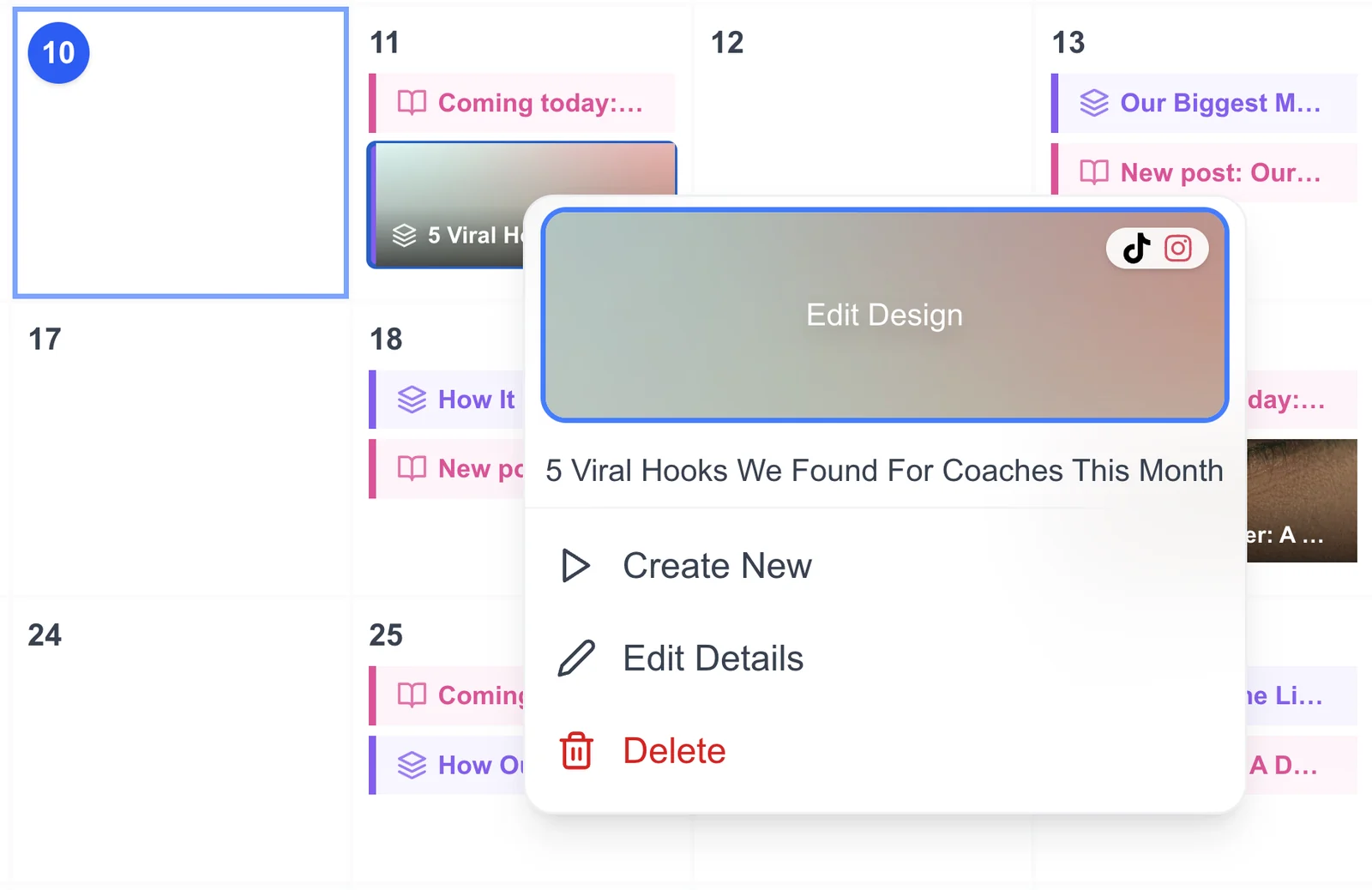
Tempistiche intelligenti e promemoria automatici
Analizzando il coinvolgimento passato, l'IA individua la finestra di pubblicazione migliore per ciascun segmento di pubblico e si adatta quando gli schemi di attività cambiano. I promemoria automatici mantengono intatto il calendario, evitando i vuoti che erodono la portata — un feed rimasto fermo per due settimane è molto più difficile da riavviare di uno che non si è mai fermato.
Creazione e automazione dei contenuti con l'IA
Gli strumenti di creazione di contenuti con IA usano l'elaborazione del linguaggio naturale per generare post in linea con il tono di voce del brand e con gli interessi del pubblico. L'automazione accelera la produzione e, soprattutto, rende la coerenza raggiungibile quando una sola persona è responsabile di più canali.
Overvisual si colloca in questa parte dello stack: genera post, caroselli e storie di brand, poi li programma, così il risultato della fase di creazione è pubblicabile e non una bozza che richiede ancora lavoro di design. È la distinzione da verificare quando si valuta qualsiasi strumento di questa categoria: chiedi di vedere un asset finito e in linea con il brand, non una didascalia.
Automatizzare la creazione consente anche un'iterazione rapida. Le varianti possono essere prodotte e testate nel tempo che prima serviva per produrne una sola, così il messaggio si adatta alla risposta del pubblico durante la campagna e non dopo. Per i formati visivi in particolare, il nostro caso d'uso sui caroselli mostra come appare questo ciclo di iterazione.
Elaborazione del linguaggio naturale e coerenza del tono di voce del brand
Gli strumenti di copywriting con IA imitano tono e stile in modo che i post automatizzati rispettino le linee guida sul tono di voce. È ciò che evita che l'automazione risulti generica. Gli strumenti configurati correttamente adattano la complessità del linguaggio e il registro emotivo a ciascun segmento di pubblico mantenendo stabile il tono di voce del brand di fondo.
Adattamento dinamico dei contenuti e test
I sistemi di IA supportano gli A/B test generando più varianti e distribuendole ai segmenti. I dati di performance in tempo reale rientrano nel ciclo, ottimizzando in continuo formati, titoli e call to action. Il carico di lavoro resta stabile mentre il numero di variazioni testate aumenta — ed è qui che sta il vantaggio economico dell’automazione.
Ottimizzazione e analisi delle campagne in tempo reale
Le analisi basate sull'IA offrono una visione in tempo reale delle performance delle campagne, permettendo di intervenire mentre una campagna è ancora in corso. È qui che si risparmia denaro: la spesa pubblicitaria sprecata e la saturazione del pubblico dipendono entrambe dai tempi di reazione, e accorciare il ciclo di feedback risolve entrambi.
Gli strumenti in tempo reale monitorano coinvolgimento, sentiment e portata, fornendo un segnale immediato su ciò che funziona. Con questo segnale, i team possono:
- Rilevare rapidamente i cali di coinvolgimento e reagire lo stesso giorno.
- Riallocare dinamicamente il budget verso ciò che rende di più.
- Personalizzare i contenuti man mano che il comportamento del pubblico cambia nel corso della campagna.
Rilevamento della saturazione degli annunci e correzioni automatiche
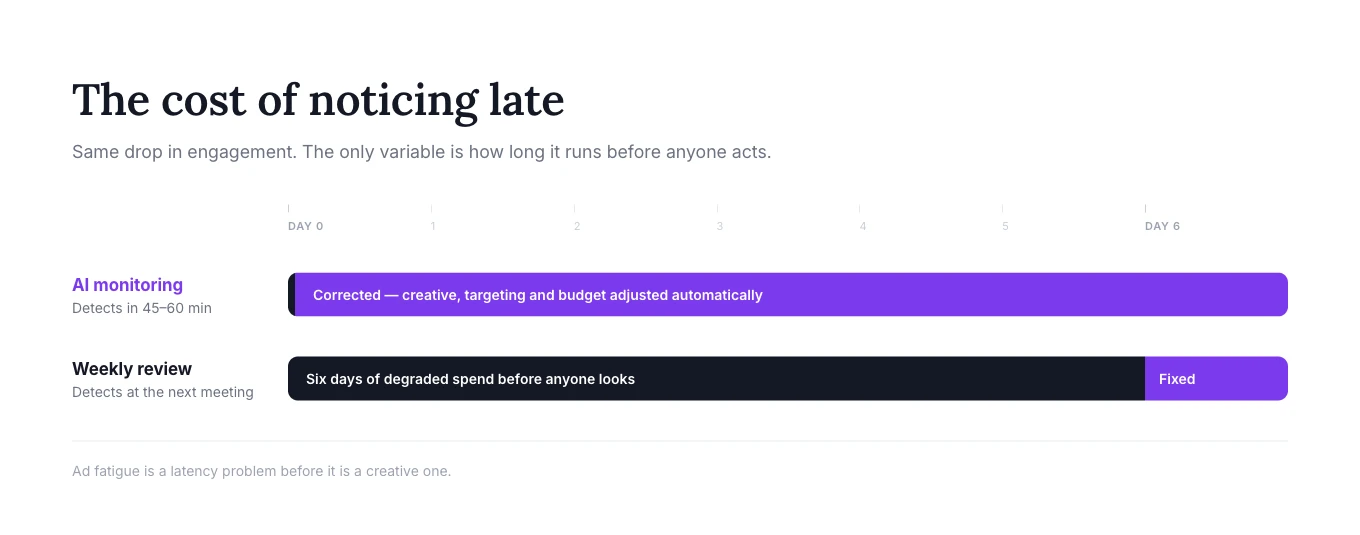
I sistemi di IA possono rilevare la saturazione degli annunci o il calo del coinvolgimento entro 45-60 minuti e modificare automaticamente contenuti creativi, targeting o budget. Questa risposta rapida evita che il pubblico perda interesse e mantiene efficaci le campagne senza che qualcuno debba controllare una dashboard. L'alternativa — accorgersene in una revisione settimanale — significa sei giorni di spesa pubblicitaria poco efficace.
Analisi del sentiment e insight sul pubblico
L'analisi del sentiment in tempo reale legge la reazione del pubblico e segnala le tendenze positive, neutre o negative. Questo orienta le correzioni del messaggio e dà forma ai contenuti futuri, cosa che conta soprattutto nei casi in cui i numeri grezzi del coinvolgimento sembrano buoni ma il sentiment sottostante è cambiato.
Ottimizzazione del budget e allocazione delle risorse
L'IA riassegna il budget verso le campagne e i segmenti più performanti, analizzando in continuo il ritorno sulla spesa pubblicitaria. L'efficienza migliora non perché una singola campagna diventi migliore, ma perché il denaro smette di restare fermo in campagne che hanno smesso di funzionare.
Tendenze emergenti nell'automazione del marketing con l'IA
Nel 2026 l'automazione del marketing con l'IA sta diventando parte della strategia e non solo un modo per eseguirla più in fretta. Gli agenti autonomi gestiscono interi cicli di campagna — selezione dei contenuti, budget, targeting — con una supervisione umana limitata.
Questi sistemi combinano dati CRM, analisi comportamentali e gestione dei contenuti per personalizzare su larga scala. I rendimenti riportati sono notevoli: circa 5,44 $ recuperati per ogni 1 $ speso in automazione del marketing e una crescita media del fatturato del 34% in tre anni (TransFunnel).
IA agentica e gestione autonoma delle campagne
L'IA agentica si distingue dall'automazione tradizionale perché esegue compiti senza istruzioni passo passo. Questi agenti analizzano i dati dei clienti, scelgono i contenuti, correggono le campagne in tempo reale e gestiscono i flussi di lavoro in autonomia. Il problema che risolvono è strutturale: la domanda di contenuti continua a crescere mentre i budget di marketing restano fermi.
Integrazione con dati CRM e comportamentali
Oggi i sistemi di marketing con IA unificano record CRM, segnali comportamentali e analisi dei social in un unico livello operativo. Questa integrazione rende possibile una personalizzazione coerente tra regioni e canali, restando entro i vincoli normativi e di sicurezza dei dati.
Crescita prevedibile e ROI misurabile
Le aziende che adottano l'automazione del marketing con l'IA riportano un aumento del fatturato e un ROI commerciale migliore. Il meccanismo è semplice: l'attenzione umana si sposta sulla strategia mentre l'esecuzione operativa è affidata a sistemi che non si stancano e non dimenticano di pubblicare.
I migliori strumenti di marketing con IA per i social media nel 2026
I principali strumenti del 2026 offrono programmazione predittiva, analisi del sentiment, ottimizzazione degli hashtag e test automatizzati. Il fattore distintivo non è più se uno strumento abbia l'IA, ma quale parte del lavoro elimini.
Vantaggi riportati in tutta la categoria:
- Tassi di coinvolgimento in aumento fino al 73%.
- Tempo di creazione dei contenuti in calo di circa il 45%.
- Miglioramenti progressivi grazie all’ottimizzazione automatica durante la campagna (GrowthGear).
Lo strumento giusto dipende dalle dimensioni del tuo team, dai tuoi obiettivi e da dove il lavoro si accumula oggi. La nostra pagina degli strumenti elenca ciò che offriamo e, se il tuo collo di bottiglia sono le storie più che i post nel feed, le storie di Instagram e TikTok sono il punto di partenza più pertinente.
Funzionalità da cercare negli strumenti IA per i social media
- Modellazione predittiva del comportamento del pubblico: anticipa la risposta del pubblico e ottimizza di conseguenza la distribuzione.
- Analisi del sentiment: legge la risposta emotiva, non solo il volume.
- Ottimizzazione degli hashtag: suggerimenti automatici che migliorano la reperibilità.
- A/B test automatizzati: sperimentazione rapida senza ulteriore lavoro manuale.
- Gestione delle risposte 24/7: chat e risposte con IA che mantengono il coinvolgimento anche fuori dall'orario di lavoro.
Quali risultati si osservano nella pratica
Le ricerche citate da GrowthGear indicano che le aziende che usano strumenti di IA registrano un aumento del coinvolgimento del 73% e una riduzione del 45% del tempo di creazione dei contenuti. Lo schema è costante tra i settori: il vantaggio deriva dall'aumentare la produzione mantenendo stabile il tono di voce del brand, non da una singola funzionalità geniale. I team che trattano l'IA come un sostituto del giudizio editoriale tendono a non raggiungere affatto questi risultati.
Domande frequenti
In che modo l'IA può farmi risparmiare tempo nella gestione dei social media?
L'IA automatizza la creazione dei contenuti e la programmazione, permettendo a un marketer di produrre un mese di post in pochi minuti e riducendo lo sforzo manuale fino al 45%. Il tempo risparmiato può essere dedicato alla strategia, alla gestione della community e alle decisioni che il software non può prendere.
Quali sono i migliori strumenti IA per la programmazione dei social media?
Le opzioni più solide nel 2026 offrono orari di pubblicazione predittivi, promemoria automatici e gestione multicanale. Scegli lo strumento in base al tuo collo di bottiglia — uno strumento di programmazione non risolverà una mancanza di contenuti pronti e un generatore non risolverà un processo di approvazione inefficiente.
In che modo l'automazione migliora il coinvolgimento sui social media?
L'automazione ottimizza i calendari di pubblicazione e personalizza i contenuti in tempo reale, aumentando il coinvolgimento fino al 73% grazie a un targeting basato sui dati. Il vantaggio deriva dalla coerenza e dalle tempistiche tanto quanto dal contenuto stesso.
Le analisi basate sull'IA possono aiutarmi a ottimizzare le mie campagne sui social media?
Sì. Le analisi con IA monitorano le performance in tempo reale e consentono correzioni durante la campagna, riducendo la saturazione degli annunci e migliorando il ROI grazie alla riallocazione continua del budget e al perfezionamento dei messaggi.
Quali tendenze emergenti dovrei seguire nell'automazione del marketing con l'IA per il 2026?
L'IA agentica che gestisce i compiti in autonomia, i dati CRM e comportamentali che confluiscono in livelli di personalizzazione unificati e uno spostamento generale verso un'attribuzione del fatturato misurabile e prevedibile.
Un piano di adozione in 30 giorni che non manda in crisi il tuo processo attuale
Molti tentativi di introdurre l’IA falliscono perché tutto cambia in una volta. Un'introduzione graduale mantiene attivo il processo attuale mentre quello nuovo dimostra il proprio valore.
Settimana 1 — misura il punto di partenza. Registra quanto tempo richiede davvero la produzione dei contenuti, quanti post escono ogni settimana e il tasso di coinvolgimento attuale per canale. Senza questi dati, in seguito non potrai capire se gli strumenti hanno aiutato o hanno solo cambiato la percezione del lavoro.
Settimana 2 — automatizza una fase, non l'intero flusso di lavoro. Scegli il singolo compito più ripetitivo, di solito la stesura di varianti o il ridimensionamento degli asset per canale. Mantieni le approvazioni in mano alle persone. L'obiettivo è dimostrare che il risultato soddisfa i tuoi standard prima che qualcosa dipenda da esso.
Settimana 3 — affida la programmazione. Una volta che la qualità dei contenuti è affidabile, sposta le decisioni sugli orari di invio alla piattaforma. È qui che emergono i vantaggi di tempistica ed è un passaggio a basso rischio, perché un post pubblicato nel momento sbagliato è recuperabile, a differenza di un post fuori brand.
Settimana 4 — ricollega le analisi alla creazione. Riporta i dati di performance in ciò che verrà prodotto dopo. Questo chiude il ciclo ed è il passaggio che la maggior parte dei team salta, ed è per questo che i loro numeri di coinvolgimento si stabilizzano dopo il guadagno iniziale di efficienza.
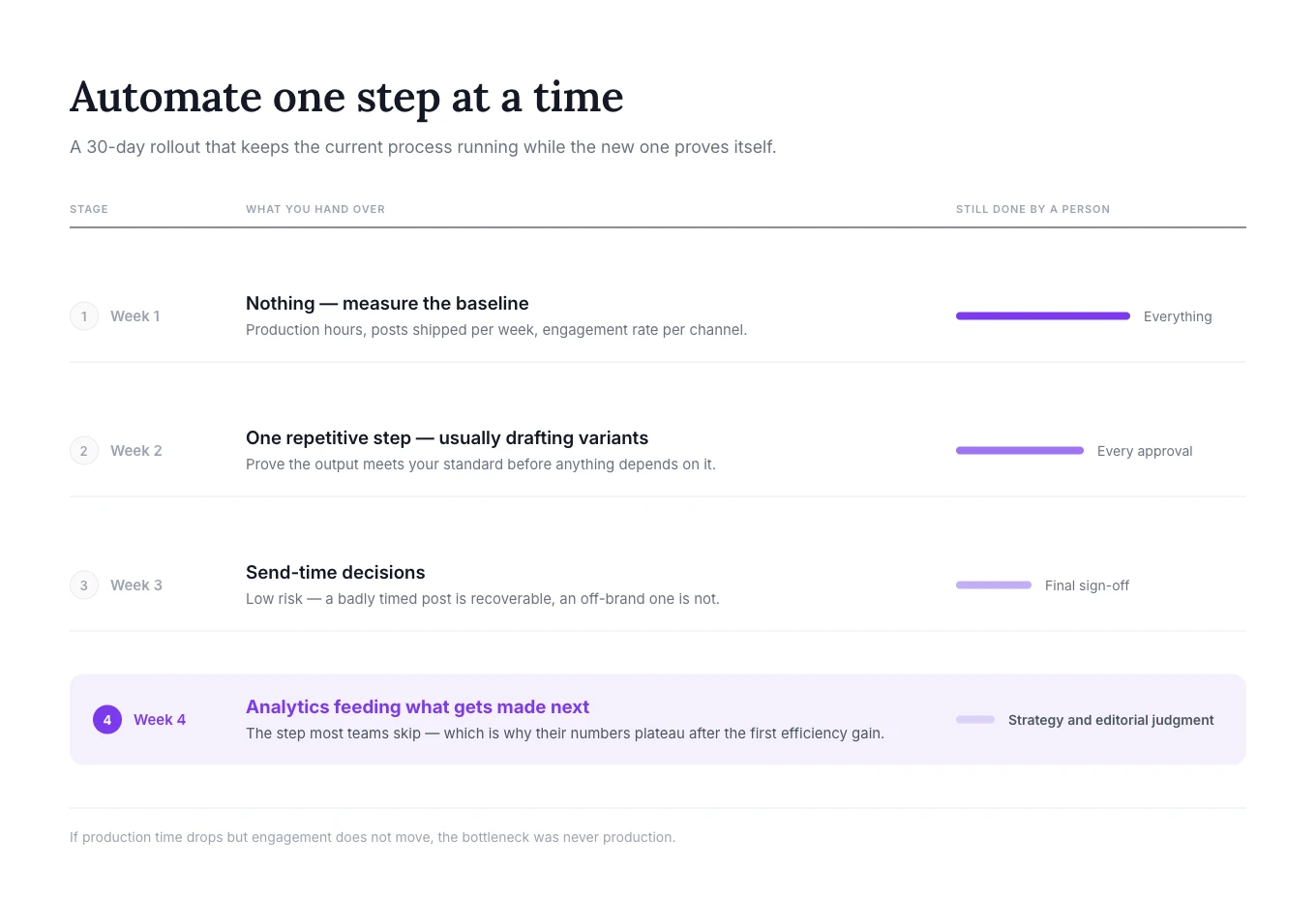
Alla fine del mese, confronta i risultati con il punto di partenza della prima settimana. Se il tempo di produzione dei contenuti è diminuito ma il coinvolgimento non si è mosso, il collo di bottiglia non è mai stato la produzione — erano i contenuti stessi, e nessuna automazione della programmazione potrà risolverlo.
Conclusione
Usare automazione e IA per massimizzare il coinvolgimento sui social media nel 2026 non è più un vantaggio competitivo — è la base di partenza. Questi sistemi fanno risparmiare tempo automatizzando creazione e programmazione, aumentano il coinvolgimento grazie alla personalizzazione e proteggono il ROI ottimizzando mentre le campagne sono ancora in corso.
Il consiglio pratico è più circoscritto di quanto suggerisca l'hype: individua quale parte del tuo lavoro sui social consuma davvero le ore, poi adotta la categoria di strumento pensata per quello specifico problema. Un brand che fatica a produrre abbastanza contenuti in linea con la propria identità ha bisogno di una piattaforma incentrata sulla creazione. Un brand con una libreria di contenuti piena e un processo di pubblicazione manuale ha bisogno di uno strumento di programmazione. Scegliere il tipo di strumento sbagliato è l’errore più comune e più costoso.
Se vuoi vedere come cambia il coinvolgimento quando la pubblicazione diventa costante, la nostra guida sul coinvolgimento delle storie di Instagram approfondisce i meccanismi.

Crea in pochi minuti i contenuti social di un intero mese, nello stile del tuo brand, con l’IA.
Prova 3 giorni a 1 €

